

Infidelity recovery wasn’t something I ever expected to go through. Four months have passed since the affair ended, and I’m still trying to understand how I got there in the first place. I am 32, my husband is 34, and we have spent ten years building a life together and raising our two kids. From the outside, we probably look like we have a good life. We have a home, two cars, healthy children, and enough money to live comfortably. But for a long time, I felt lonely inside my own marriage.
To be completely honest, I crossed the line. I had an affair, although it has been over for four months now. It wasn’t because we were struggling financially. My husband is a genuinely good man, and he works incredibly hard to provide for us. Every weekday, he leaves the house around 6:00 AM and usually doesn’t get home until 6:30 or 7:30 PM. When he has to take clients out for dinner or finish a major project, he sometimes doesn’t get home until 10:00 or 11:00 PM. Some nights, he barely has enough energy to eat something, take a quick shower, spend half an hour or an hour throwing a ball around with the kids, and then open his laptop again. Weekends weren’t much different. Saturdays and Sundays were often filled with urgent work, and he would sometimes stay up late just to catch up on emails.
His entire life seemed to revolve around work. The upside was that his career paid well. He brought home around $12,000 to $15,000 a month, and most of that money went toward our household expenses, savings, and investments. We weren’t struggling to pay our bills. We owned a comfortable 3,000-square-foot home in a quiet suburban neighborhood, and we had two cars in the driveway—his reliable truck and my modest sedan.
Materially, we had very little to complain about. But emotionally, I felt completely disconnected. Our life started to feel routine and mechanical. We lived under the same roof, but sometimes it felt like we were roommates sharing a house rather than a married couple.
For almost two years, we hadn’t really made time for just the two of us. The kids were always around, work was always waiting, and somewhere along the way, the little things that used to make our relationship feel special had disappeared. He stopped bringing home flowers or small gifts. Instead, when I mentioned something I liked online, he would text me that he had transferred money into my account and tell me to buy it.
Sometimes I would point out a cute dress or a pair of shoes. It wasn’t because I couldn’t afford them; I could buy them myself. I wanted him to look up from whatever he was doing, smile, and say something like, “That would look great on you.” I wanted a reaction and some actual human interaction, but I’d usually get something like, “Whatever you like. Just order it,” and that would be the end of the conversation.
We talked about this more than once over the years, but his answer was usually some version of the same thing. He would tell me that he was working all those hours because he wanted our family to be financially secure. He didn’t have the free time he used to have for dates and romantic gestures, and as far as he was concerned, he was working hard for his family and wasn’t doing anything wrong. Honestly, he wasn’t wrong about that. He was working hard.
But I kept thinking that a marriage needed more than financial security. I wanted to feel noticed. I wanted to feel like his wife, not just the mother of his children and the person sharing his household. Looking back now, I realize I didn’t do a good job explaining that. Instead, I let the distance between us grow.
When I Realized What I Was Risking
That was when I met another man. At first, he felt like someone who really understood me. We connected easily, and being around him made me feel seen again. But what we were doing was wrong.
We crossed the line and became intimate twice. It wasn’t a long-term double life, but that doesn’t make it okay, and I don’t want to make excuses for what I did. In the beginning, being with him made me feel young again. He brought me flowers, bought small thoughtful gifts, took me to the movies, walked around downtown with me, and took me out for nice dinners.
Those things might sound small, but after years of feeling like my marriage had become nothing but work, children, chores, and routines, they felt important to me. It reminded me of how my husband and I had been when we first started dating ten years earlier. This was the first time I had ever stepped outside of my marriage.
One ordinary Tuesday, I was walking my children to school when something finally clicked. I looked at them and thought about the life we had built. I thought about the clothes they wore, their school expenses, the car that got us safely from place to place, our home, our savings, and all the ordinary things I had stopped noticing because they had become part of everyday life.
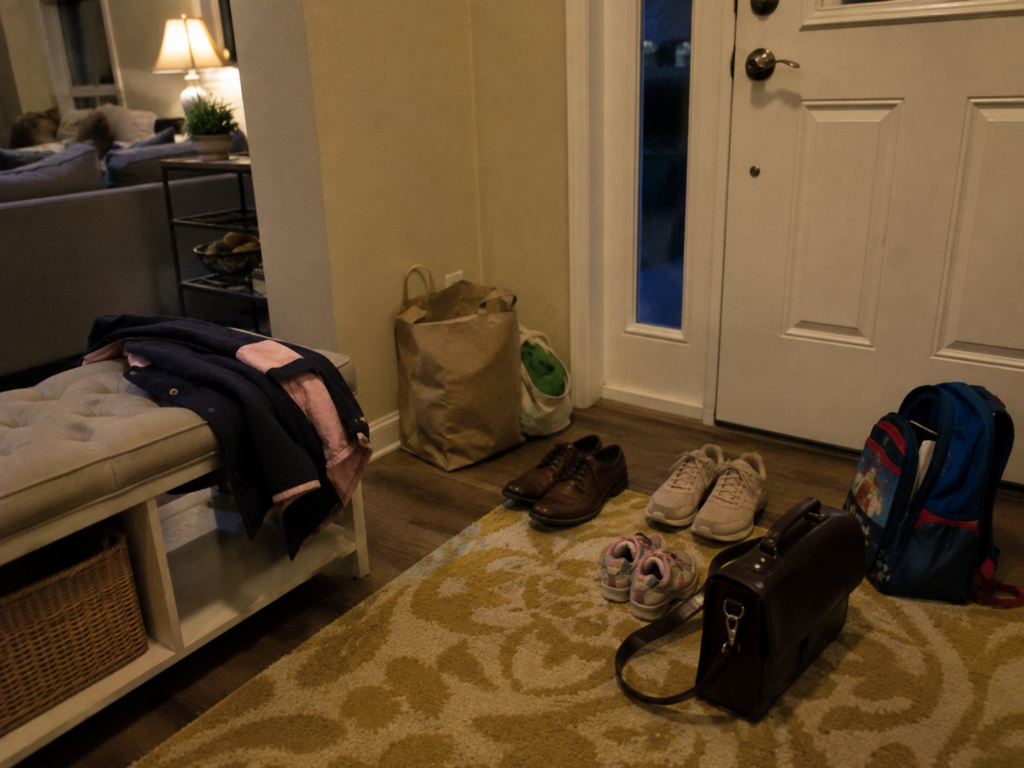
Behind those things was my husband’s work: the long days, the late nights, the weekends spent answering emails, and the years he had spent trying to build financial security for our family. Meanwhile, the man I was seeing was happy to bring me flowers or plan a casual afternoon together, but he wasn’t interested in the responsibilities that came with a real family life. He wanted the fun parts without the responsibility.
He wanted someone to spend time with, not a partner to build a life with. During our conversations, he had made it clear that he didn’t want to get married. He didn’t want the responsibilities that came with raising children or building a family. And suddenly, I understood the difference.
I wasn’t looking at a future with him. I was looking at an escape from the parts of my current life that I had been unhappy with. That realization changed everything, and I ended the relationship. There wasn’t some dramatic final scene; I simply made the decision that it had to stop.
He respected my decision. I told him honestly that I had crossed a line and that I needed to take responsibility for what I had done. Unlike him, I already had a family, and I couldn’t pretend my choices affected only me.
What Infidelity Recovery Has Taught Me
Going home and deciding to stay married didn’t magically fix everything. It was slower than that. I had to admit something uncomfortable: my husband wasn’t deliberately trying to hurt or neglect me. He had a different way of showing love.
For him, working long hours and making sure our family was financially secure was part of taking care of us. He wasn’t bringing home flowers anymore, but he was trying to make sure our children had a stable life. I had been looking at what was missing and ignoring what was already there.
I also had to take responsibility for the way I handled my unhappiness. I had spent a long time blaming my husband for how lonely I felt without clearly telling him what I actually needed from him. At one point, he had even reminded me that I wasn’t trapped at home.
He told me I could go out with friends whenever I wanted. We had a nanny and a babysitter, and there was no reason for me to sit at home feeling like I had no choices. He had a point. I had convinced myself that I was stuck in a life I didn’t enjoy, even though I had more freedom than I was allowing myself to see. I just hadn’t known how to communicate what I needed.
I used to think romance was supposed to look like it did when we were young: flowers, dates, small surprises, and that feeling of being completely consumed by another person. But after ten years of marriage and two children, I see things differently. Marriage isn’t always exciting. Sometimes it’s one person working late while the other handles bedtime, or paying bills, planning for the kids, saving for the future, and figuring out how to make a busy household work.
That doesn’t mean emotional connection isn’t important. It is. I still need affection, attention, conversation, and time together, and those needs didn’t disappear just because my husband works hard. But I also understand now that I can’t expect him to guess what I need. I have to say it, and I have to make room for him to say what he needs, too.
If we want our marriage to work, we both have to make an effort. I didn’t know what infidelity recovery would look like when I ended the affair. I thought ending it would be the hard part, but it wasn’t.
The harder part has been sitting with what I did and accepting that I can’t undo it. I hurt the person who trusted me, I put my family at risk, and I have had to look honestly at the parts of myself that allowed me to make that choice. I’m not going to pretend that everything is suddenly perfect. It isn’t.
But I don’t want to go back to that version of myself who believed that someone outside my marriage could solve a problem I hadn’t been willing to face inside myself. I made a serious mistake. At the same time, this experience forced me to look at my marriage differently.
I understand now that being financially secure doesn’t automatically make a relationship emotionally healthy. But emotional loneliness also doesn’t excuse betraying someone. Both things can be true. My husband needed to understand that I needed more than financial support, and I needed to understand that my unhappiness didn’t give me permission to cross a line.
I can’t change what happened four months ago. What I can do is decide what happens next. I want to rebuild the connection I thought we had lost. I want to spend time with my husband again, talk instead of assuming, and stop measuring his love only by the things he no longer does.
I made a mistake, but that mistake taught me something about commitment that ten comfortable years never could. I don’t want another life. I want to learn how to appreciate the one I already have and put real effort into making my marriage better instead of looking somewhere else for what I thought was missing.
And this time, I know that simply staying together isn’t enough. We have to actually be present for each other.