

Six months ago, getting my 14-year-old son to do anything around the house felt like a daily argument. He was slipping into that prickly, unreachable phase of adolescence. He spent most of his time outside of school locked in his room, playing video games with his headphones on. His shoes were usually left somewhere between the front door and the couch, and I stopped counting how many times I had asked him to pick them up. Any request to clean his room or help out was met with a heavy sigh or total silence.
If you’re parenting a rebellious teenager, you probably know that exhausting feeling in your chest—like you’re slowly losing your sweet kid to an argumentative roommate.
A few weeks ago, I shared the first small boundary we set in our home: our nightly 30-minute reading routine. That little habit gave us something to talk about again. But today, I want to talk about step two—the simple habit that actually helped us start talking naturally.
Along with reading, my husband and I decided to spend 30 minutes every evening doing something active with our boys. My younger son usually plays catch in the yard with his dad, while my older son and I take a walk or go for a light jog around the neighborhood.
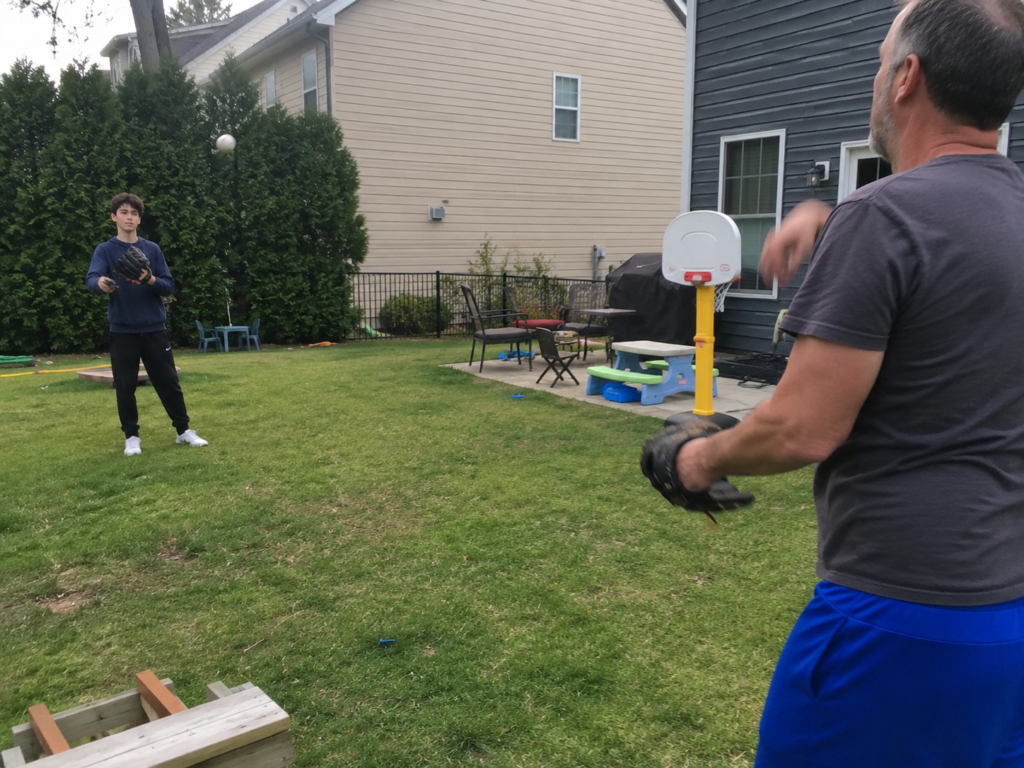
Those 30 minutes became one of the few times we could actually talk without arguing. But there was a catch: the second I tried to lecture him or ask about his grades, he would instantly clam up. I had to learn how to keep things casual and let conversations happen naturally.
Here are two small moments from our walks that changed how we talk to each other.
Six nights ago, my son was doing his dinner chore—washing the dishes. As he rinsed a plate, he left the kitchen tap running on full blast while reaching up to put it on the drying rack.
My mom, who lives with us, was sitting at the kitchen island. Watching the water pour down the drain, she finally said, “Turn off the tap while you’re placing the dish! You don’t pay the water bill, so you don’t realize how wasteful that is.”
My son’s back immediately stiffened. He didn’t say a word, but he set the plate down with an aggressive clatter.
My mom sighed, “Don’t throw an attitude with me. Your parents work hard to keep this house running, and turning off a faucet isn’t that hard.”
That was all it took. My son turned around, his face red, and snapped, “If it bothers you so much, do it yourself! I’m doing what I was asked, and nothing I do is ever good enough anyway!” He tossed the sponge into the sink, stomped upstairs, and shut his bedroom door.
Sitting between an upset grandmother and an angry teenager was exhausting. That night, I decided to handle it in two parts.
First, I talked to my mom in private. “Mom, I know his tone was disrespectful, and I’ll address it with him. But six months ago, he wouldn’t even bring his plate to the sink. He’s trying, even if he gets defensive. Let me talk to him during our walk tonight.” She took a breath and agreed to let it rest.
Later that evening, as my son and I were walking under the streetlights, I didn’t bring up the kitchen argument right away. We just walked in silence for a bit.
Then I asked casually, “Remember that historical book we read last week?”
“Yeah, kind of,” he muttered.
“Do you remember the part where the kids had to carry buckets of water from a well just to wash up?”
“Yeah. That sounded like a nightmare.”
“Well, to your grandma,” I said gently, “wasting water probably feels very different from how it feels to you. Her parents grew up with much less, and that mindset probably stayed with her. Watching a faucet run continuously just makes her anxious.”
He walked quietly for a minute, kicking a small pebble on the pavement. “I didn’t think about it like that,” he said softly. “I just felt like she was jumping on me over nothing.”
“I get why her tone felt sharp,” I replied. “But now that you know why it bothers her, how do you want to handle it next time?”
“I guess I can just use a bowl of water to rinse things,” he mumbled. “And… I’ll tell her I’m sorry for snapping.”
RELATED:
- I Unlocked My Teenager’s Phone Out of Curiosity and Found Out I Was Her Biggest Nightmare
- 10 Words of Encouragement for Kids Every Parent Should Use
- 30 Clever Riddles for Kids and Parents to Solve Together
A few days later, on another walk, we passed a delivery driver sitting on his scooter outside a diner, waiting for an order in the humid evening air.
I pointed toward the curb. “When do you think delivery drivers work the hardest?”
“Probably when it’s freezing or pouring rain,” he said. “When no one wants to go outside.”
“Exactly. They spend a lot of time on the road, and they still have gas and other expenses to cover.”
Then I asked him, “Do you remember what we pay your math tutor for a two-hour session?”
“Yeah, sixty bucks.”
“His tutor can make that much from a couple of hours of teaching. A delivery driver might have to spend much longer on the road to earn the same amount. Why do you think that difference exists?”
He slowed his pace, thinking it over. “Because he spent years learning high-level math. He’s using specialized skills instead of just physical time.”
“That’s one reason I keep telling you that school isn’t just about getting good grades,” I smiled. “The skills you build now can change what kinds of choices you have later.”
“Yeah,” he said quietly, picking up his pace again. “That makes sense.”
I’ve realized that guiding a teenager isn’t about giving big lectures or laying down guilt trips. That usually just builds resentment. It’s about finding small, low-pressure moments where you can ask simple questions and let them figure things out on their own.
He still rolls his eyes sometimes. He still forgets his dishes on the counter. We still have arguments. But now, every once in a while, he starts the conversation himself. For me, that’s real progress.