
I always thought staying together for the kids was protecting my family. But for over four years, my husband and I lived like total strangers under the same roof.
Our marriage was dead in the water, but we kept up the appearance of a functional family because of our thirteen-year-old son. He has mild autism, and years ago, a specialist advised us that keeping a stable, predictable environment was crucial for his development.
So, we made a pact. During the day, we acted like polite roommates and functional parents. At night, we retreated to separate bedrooms, barely speaking a word. My husband moved on with his life long ago and had someone else on the side, while I swallowed my pain every single day, convincing myself I was sacrificing my happiness so my child wouldn’t lose his home.
I truly believed we were hiding it well. Until yesterday morning.
The Sticky Note on the Kitchen Counter
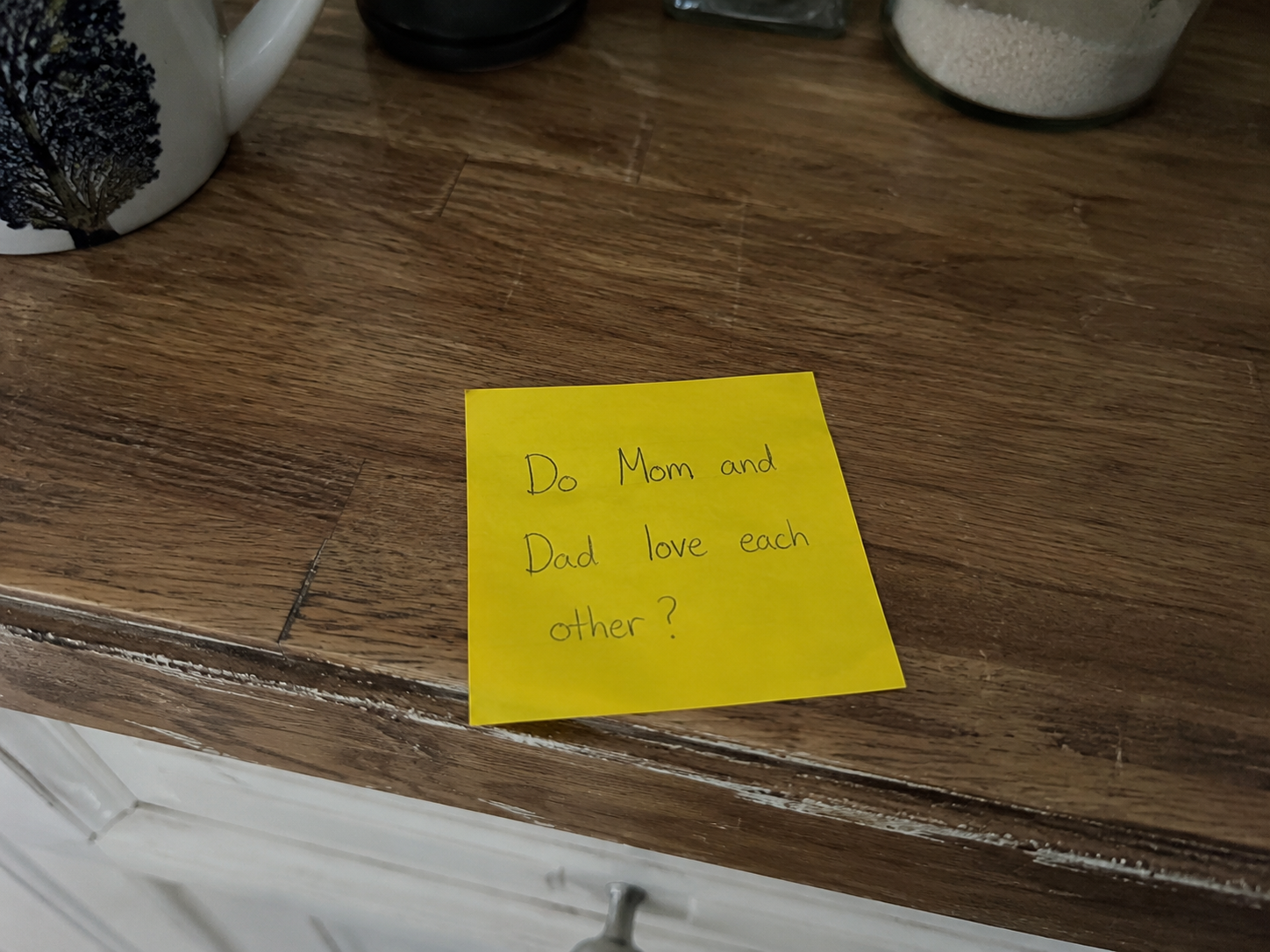
I walked into the kitchen to make breakfast, and there it was—a bright yellow sticky note sitting right in the middle of the counter.
Written in my son’s neat, careful handwriting were six simple words:
“Do Mom and Dad love each other?”
My heart dropped to the stomach. I froze. A moment later, my husband walked past the counter. He glanced down at the paper, read the question, and stopped in his tracks. He didn’t say anything. He just stared at it for a long, quiet minute, grabbed his coffee mug, and walked out.
I forced myself to breathe and put on a brave face to get my son ready for school. But after my husband drove him off, I walked into my son’s bedroom to fold his laundry. That’s when I noticed a small leather journal tucked under his pillow.
My stomach churned with a bad feeling. I knew I shouldn’t pry, but my hands opened that notebook before my brain could stop me.
The Heartbreaking Secret He Carried Alone
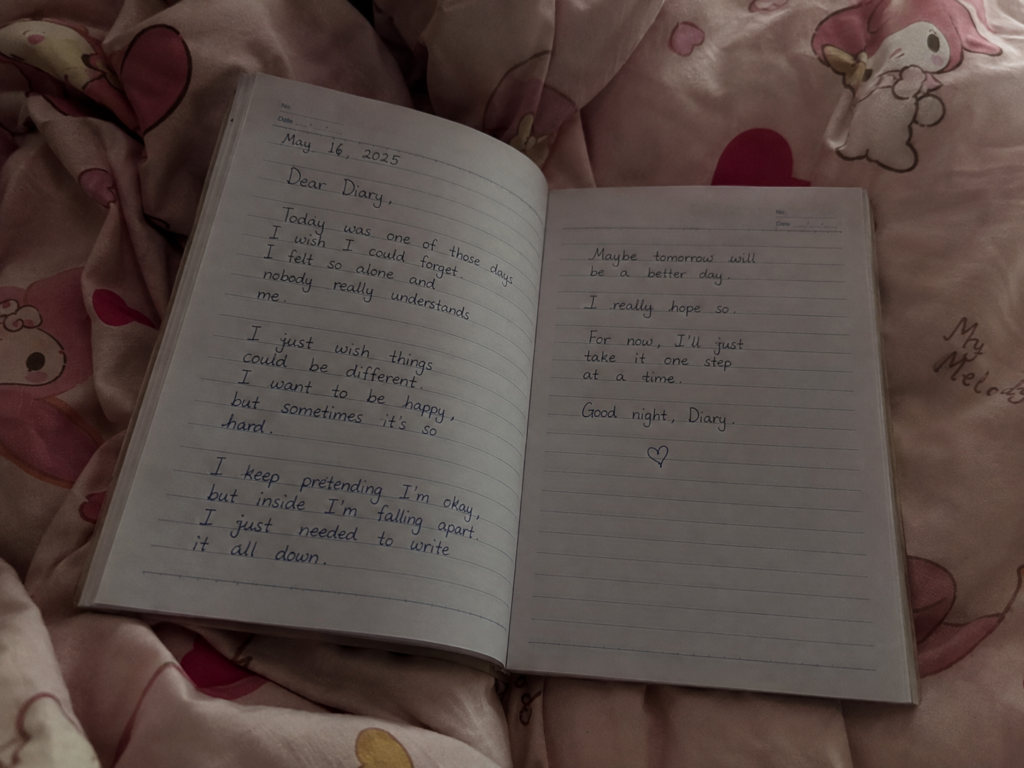
Reading those pages felt like being punched in the chest over and over again.
My thirteen-year-old son hadn’t just noticed our quiet arrangement; he had tracked it like a detective. He recorded the exact date his father moved to the guest room. He wrote about the nights he heard me crying quietly in the bathroom. He noted the weekends his father claimed to be away on business trips when he knew that wasn’t true.
He knew we didn’t love each other. He had known for years.
But the part that completely broke me—the part that made me fall to my knees on his bedroom floor—was the crushing guilt he had been carrying on his young shoulders.
He wrote that he thought our marriage fell apart because of him. He blamed his sensory meltdowns and his mild special needs for draining our happiness. He wrote: “I tried so hard to get better grades, to be quiet, and not to annoy anyone. But I guess I’m still not good enough to make Mom and Dad love each other again.”
And then came the line that shattered my soul: “Maybe if I wasn’t here anymore, Mom and Dad wouldn’t have to suffer living together.”
A Packed Suitcase at the Park

I couldn’t even hold the notebook straight. My hands were shaking so violently I had to lean against the wall just to stand up.
Around 2:00 PM, my phone rang. It was his school nurse, telling me my son had asked to go home early because of an upset stomach, but he had slipped out of the building before anyone could pick him up.
Panic seized me. I sprinted out of the house and began driving around our neighborhood like crazy. Ten minutes later, I spotted him.
He was sitting alone on a wooden bench in the park near our house. Beside his feet was a small rolling suitcase packed with his clothes.
I ran up to him, tears streaming down my face, and wrapped my arms around him. He didn’t cry. He just looked at me with this calm, heavy expression that no thirteen-year-old child should ever have.
“If I leave,” he said quietly, “you and Dad don’t have to force yourselves to stay together because of me anymore.”
Where Do I Even Begin to Fix This?
In that exact second, the painful truth hit me like a freight train.
For four long years, I thought I was being a hero. I thought I was protecting my child from the pain of a broken home. But in reality, my husband and I had created a cold, fake environment that forced a sensitive teenage boy to absorb all our silent toxicity and blame himself for our failed marriage.
The person who suffered the most wasn’t me, and it wasn’t my husband. It was our innocent son, who was quietly drowning in guilt behind closed doors.
I took him home, held him tight, and told him over and over again that our problems had zero percent to do with him, and that both of us love him more than life itself. But I know words alone won’t erase years of quiet damage.
We are finally moving toward an official divorce, and we are working out a proper arrangement for co-parenting so our son can have two happy, separate homes instead of one toxic household. But as a mother, I feel so lost and guilty.
Has anyone else been through something similar? How do you help a sensitive child heal when they’ve spent years believing your broken marriage was their fault?